11 September 2026
AI copyright disputes: who owns training data and AI-generated content, with a Mapleroot section.
As AI generated content becomes more common, so does the friction around who owns it, and whether the material used to train these models was ever fair to use in the first place. AI copyright and content ownership disputes have become one of the most persistent and unresolved issues in the industry, touching writers, musicians, visual artists, and the companies building AI models alike.
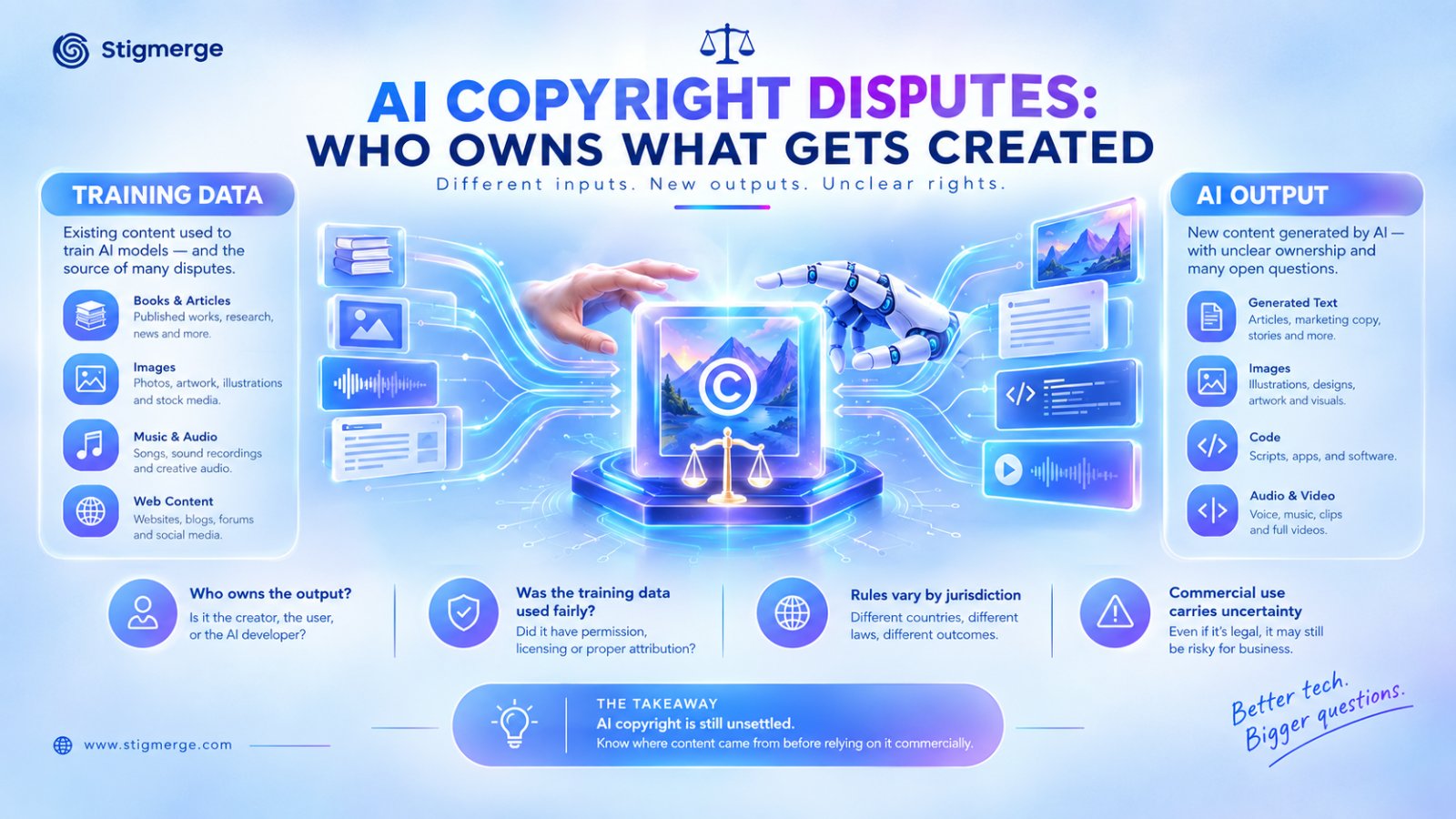
AI Copyright Disputes: Who Owns What Gets Created As AI generated content becomes more common, so does the friction around who owns it, and whether the material used to train these models was ever fair to use in the first place. AI copyright and content ownership disputes have become one of the most persistent and unresolved issues in the industry, touching writers, musicians, visual artists, and the companies building AI models alike. Two Separate Fights Happening at Once There are really two overlapping disputes here, and it's easy to conflate them. The first is about training data. Many AI models were trained on massive amounts of text, images, and other content scraped from the internet, often without explicit permission from the original creators. Writers, artists, and publishers have argued this amounts to using their work without consent or compensation. AI companies have generally argued that training on publicly available material falls under fair use, since the model is learning patterns rather than storing and reproducing the original work directly. The second is about output. Even when training data isn't the issue, there's an open question about who owns content that an AI generates, especially when a human provides only a short prompt. Some jurisdictions currently don't grant copyright protection to purely AI generated work at all, while others are still figuring out how much human involvement is needed for a piece of AI assisted content to be legally protected. Why This Isn't Settled Yet Courts, legislators, and companies are all still working through these questions, and the answers differ from country to country. That creates real uncertainty for anyone building a business around AI generated content: what's usable, what's protected, and what could become a legal liability down the line isn't fully settled, and the rules may keep shifting as more cases get decided. A Related Example: Mapleroot This is relevant for Mapleroot to keep an eye on as well. If Mapleroot uses AI tools to help produce any kind of content, text, images, code, or otherwise, it's worth being clear on where that content came from, what it can be used for, and whether ownership of the final output is actually secure. Relying on AI generated material for anything client facing or commercially important carries some risk while these ownership questions are still being worked out across different legal systems. Staying informed on how this area develops, rather than assuming today's practices will hold up indefinitely, is a reasonable precaution. The Takeaway AI copyright disputes aren't a side issue, they're a foundational question the industry still hasn't fully answered. Until clearer legal standards emerge, anyone using AI generated content commercially is operating with some degree of uncertainty about who actually owns what gets created.