9 September 2026
AI-native creative suites: all-in-one platforms for AI video, image, and audio generation, with a Mapleroot section.
A noticeable trend this year is the rise of AI native creative suites, platforms built from the ground up around AI generation and editing across images, video, and audio, rather than traditional creative software with an AI feature bolted on. Instead of separate tools for video editing, visual effects, sound design, and marketing content, these suites combine all of it into a single environment.
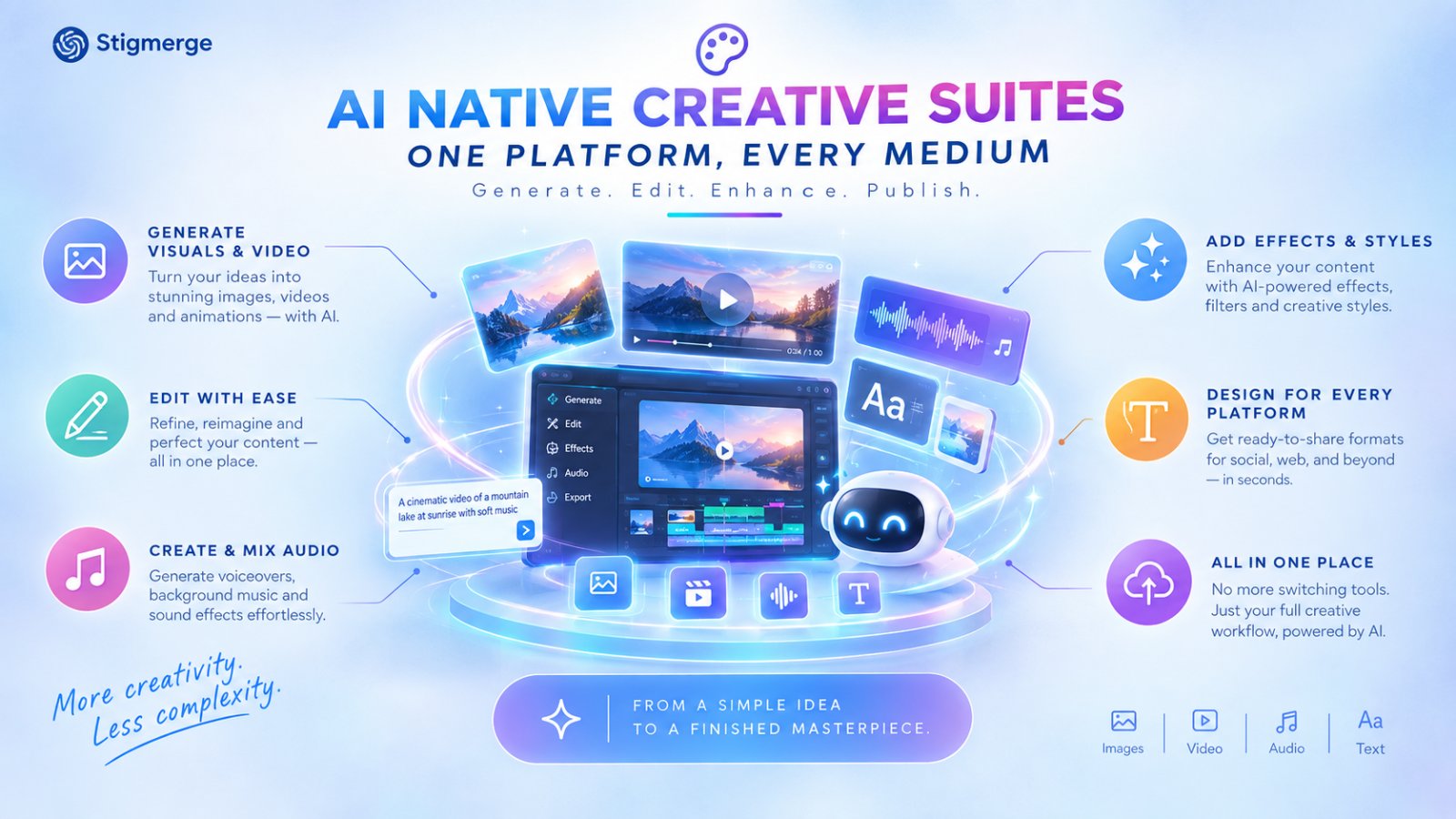
AI Native Creative Suites: One Platform, Every Medium A noticeable trend this year is the rise of AI native creative suites, platforms built from the ground up around AI generation and editing across images, video, and audio, rather than traditional creative software with an AI feature bolted on. Instead of separate tools for video editing, visual effects, sound design, and marketing content, these suites combine all of it into a single environment. Why This Is Different From Just Adding AI Features Most established creative software started as tools built for human made content, editing timelines, layers, and tracks, and later added AI features on top: an AI background remover here, an auto caption tool there. AI native suites flip that order. Generation and editing are the core of the product from day one, which changes what's actually possible. Because these platforms are built around generation first, a user can move from a text description straight to a finished video, complete with visual effects presets, music, and marketing ready formatting, all inside one tool. That's a meaningfully different workflow than generating a raw clip in one app and then importing it into three other tools to make it usable. Where the Value Actually Shows Up The practical appeal isn't just "AI can make videos now." It's that a single platform handling generation, editing, effects, and output formatting removes a lot of the friction that used to sit between an idea and a finished piece of content. A small marketing team without a full production pipeline can produce content that previously would have required several specialists and several separate tools. This is part of why these platforms are gaining traction quickly. The barrier to producing polished video and audio content is dropping, not because any single AI model got dramatically better, but because the entire production pipeline got consolidated into one place. A Related Example: Mapleroot This is worth thinking about for Mapleroot too. If Mapleroot ever needs to produce video, image, or audio content, for marketing, internal communication, or client facing material, an AI native creative suite could shorten that process considerably. Instead of coordinating between separate tools for generation, editing, and formatting, or relying on external production help for every piece of content, Mapleroot could produce a finished, polished result from a single platform, cutting both the time and the specialized skill previously required to get from an idea to a usable file. The Takeaway AI native creative suites aren't just a faster way to make content, they represent a shift in who can produce it. As generation, editing, and output all live in one place, the constraint moves away from technical production skill and toward having a clear idea of what you actually want to create.