11 September 2026
AI-powered smart contract security: using AI to catch vulnerabilities before and after deployment, with a Mapleroot section.
Smart contracts, self executing code that runs on a blockchain, are notoriously unforgiving. Once deployed, a smart contract often can't be easily changed, and any vulnerability in its code can be exploited immediately, sometimes draining funds within minutes. AI powered security tools are increasingly being used to catch these vulnerabilities before deployment, and to monitor for suspicious activity after.
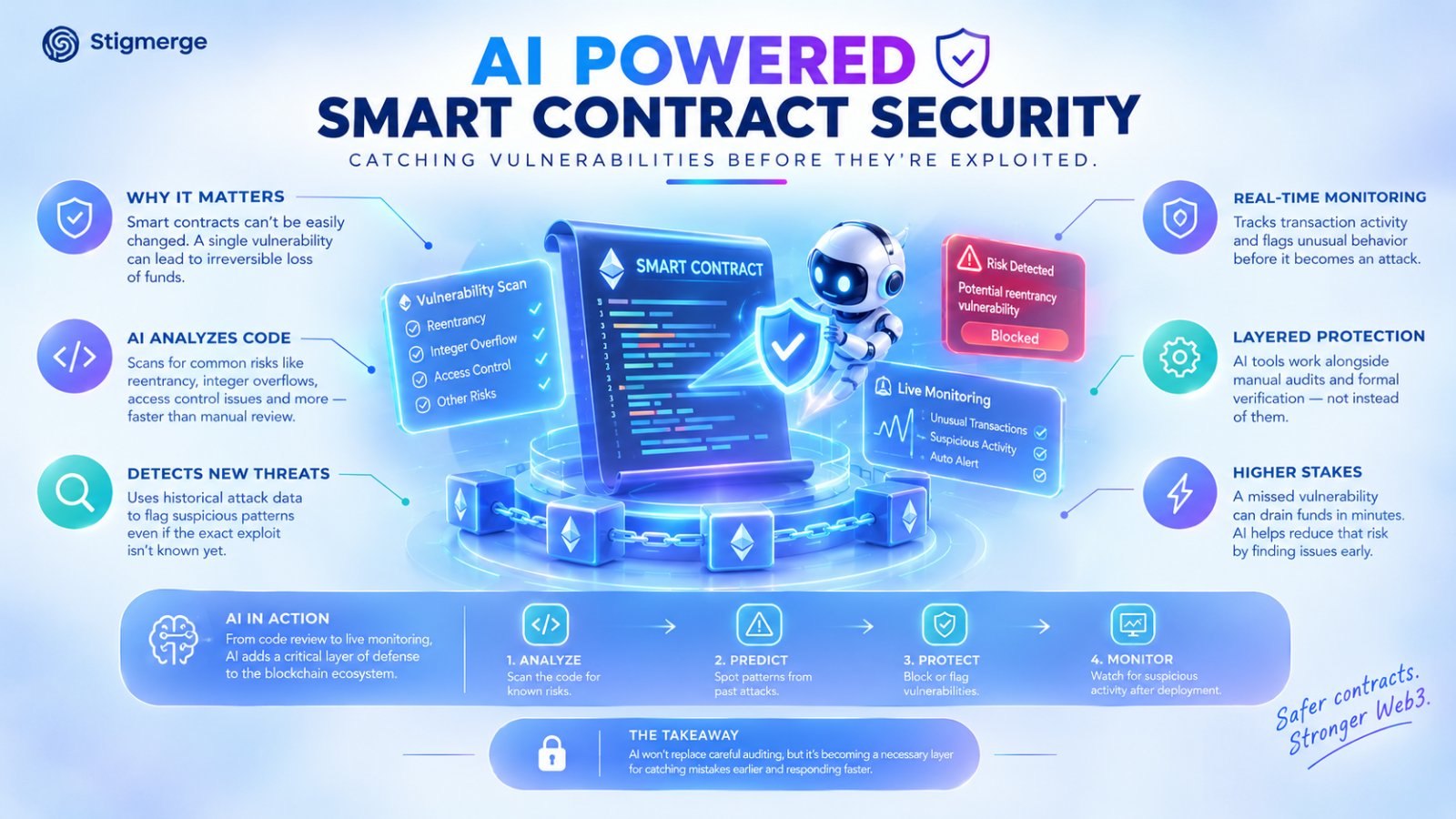
AI Powered Smart Contract Security: Catching Vulnerabilities Before They're Exploited Smart contracts, self executing code that runs on a blockchain, are notoriously unforgiving. Once deployed, a smart contract often can't be easily changed, and any vulnerability in its code can be exploited immediately, sometimes draining funds within minutes. AI powered security tools are increasingly being used to catch these vulnerabilities before deployment, and to monitor for suspicious activity after. Why Smart Contracts Need a Different Approach to Security Traditional software can usually be patched after a bug is found. Smart contracts frequently can't be, since immutability is often the whole point of putting logic on a blockchain in the first place. That means the cost of a missed vulnerability is much higher than in typical software development, a single flaw can lead directly to stolen funds with no way to reverse the transaction. This has made smart contract audits a critical, high stakes part of any blockchain project, and manual audits alone often aren't fast or thorough enough to keep up. Where AI Is Being Applied AI tools are now being used at several points in this process. During development, AI assisted code analysis can scan a contract for known vulnerability patterns, reentrancy issues, integer overflow, access control mistakes, far faster than a manual review would catch them. Before deployment, AI models trained on historical exploits can flag code that resembles patterns seen in past attacks, even if the exact vulnerability hasn't been publicly documented yet. After deployment, AI based monitoring systems can watch transaction activity in real time and flag unusual patterns that might indicate an attack in progress, sometimes fast enough to trigger an emergency response before major damage is done. The Limits of Current Tools AI assisted security tools are a meaningful improvement over manual review alone, but they're not a guarantee. These tools are generally good at catching known vulnerability patterns, but a genuinely novel attack technique can still slip past automated detection. Most serious projects treat AI powered analysis as one layer in a broader security process, alongside manual audits and formal verification, rather than a replacement for either. A Related Example: Mapleroot This is relevant to think through for Mapleroot if any part of its work touches blockchain based systems or smart contracts. Incorporating AI assisted vulnerability scanning early in development, rather than only at the final audit stage, could catch costly mistakes while they're still cheap and easy to fix. Combined with real time monitoring after deployment, this kind of layered approach reduces the chance that a single missed vulnerability turns into an irreversible loss. The Takeaway As more value moves through smart contracts, the cost of a missed vulnerability keeps climbing, and manual review alone increasingly can't keep pace. AI powered security tools won't replace careful auditing, but they're becoming a necessary layer for catching mistakes earlier and responding to attacks faster than manual processes alone ever could.