11 September 2026
Tokenization of data and AI models: representing datasets and model access as digital tokens for provenance and ownership, with a Mapleroot section.
Tokenization, the process of representing real world assets or datasets as digital tokens on a blockchain, is increasingly intersecting with AI in interesting ways. What started mostly as a finance concept, turning real estate, art, or securities into tradable digital tokens, is now expanding into how data itself, and even AI models, get represented, tracked, and exchanged.
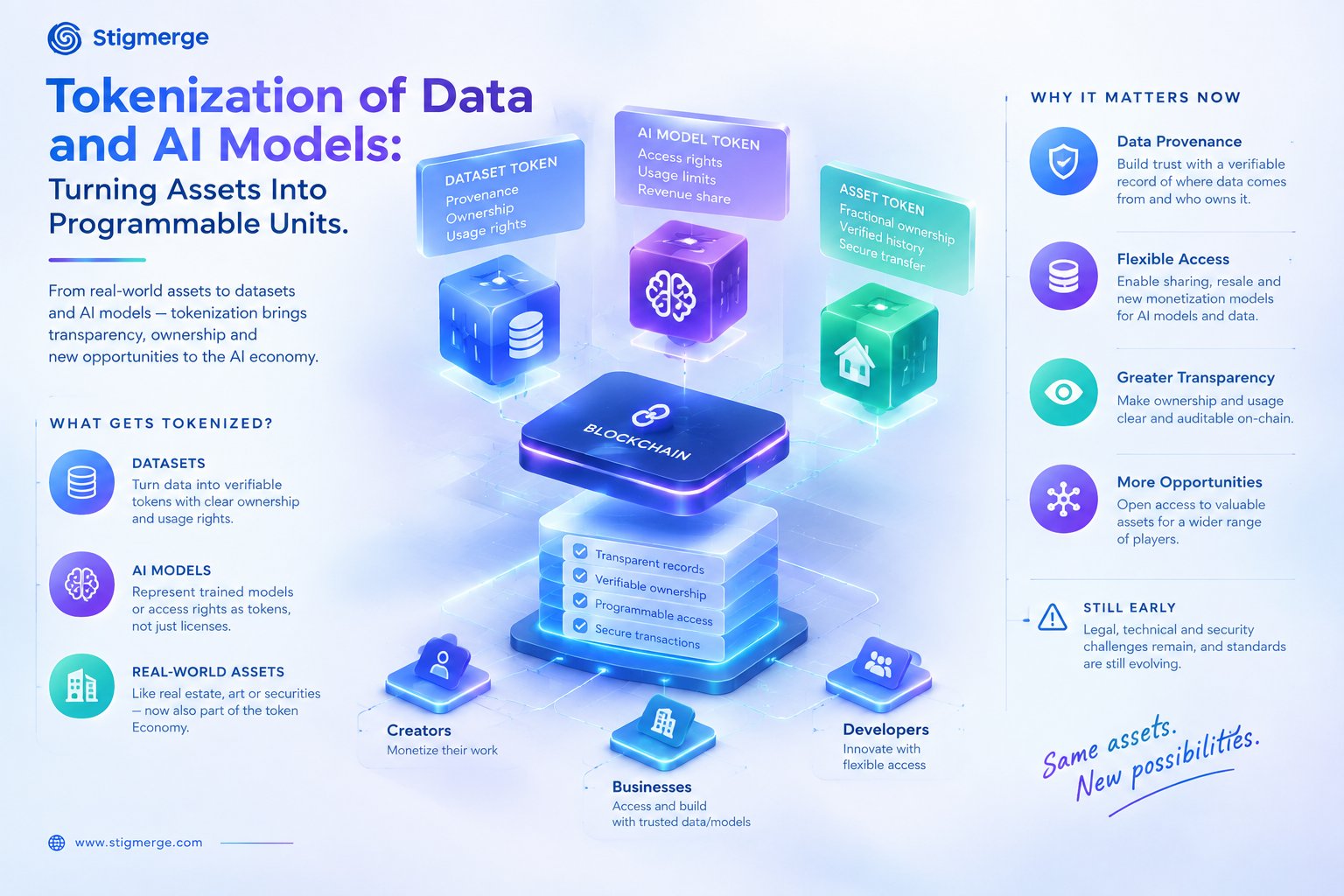
Tokenization of Data and AI Models: Turning Assets Into Programmable Units Tokenization, the process of representing real world assets or datasets as digital tokens on a blockchain, is increasingly intersecting with AI in interesting ways. What started mostly as a finance concept, turning real estate, art, or securities into tradable digital tokens, is now expanding into how data itself, and even AI models, get represented, tracked, and exchanged. What Tokenization Actually Means Here At its core, tokenization takes something that used to be a single, indivisible asset and represents it as a digital unit that can be tracked, verified, and often split into smaller shares. Applied to data, this means a dataset can be represented as a token with a clear, verifiable record of who created it, who owns rights to it, and who has used it. Applied to AI models, it means a trained model itself, or access rights to that model, can be represented and transferred as a token rather than through a traditional licensing agreement. Why This Is Gaining Attention Now Two problems are pushing this trend forward. First, data provenance. As AI training data disputes grow more common, being able to prove where a dataset came from and who has rights to it is becoming genuinely valuable, and tokenization offers a verifiable record for that. Second, model access and monetization. Instead of a rigid licensing contract, a tokenized model can be accessed, shared, or resold in smaller units, opening up more flexible ways for AI developers to monetize their work and for smaller players to access capabilities that would otherwise require a full enterprise contract. The Practical Limits This is still an early and somewhat experimental area. Tokenizing a dataset doesn't automatically solve legal ownership questions, it mainly creates a clearer record. Similarly, tokenizing access to an AI model introduces new technical and security considerations, since the token itself becomes a target worth protecting. The infrastructure and standards for doing this reliably are still being worked out, which means adoption right now tends to be concentrated among companies actively experimenting with blockchain based systems rather than the industry at large. A Related Example: Mapleroot This is worth keeping an eye on for Mapleroot. If Mapleroot ever handles valuable datasets, proprietary models, or content whose provenance and ownership matter, tokenization could offer a way to keep a clear, verifiable record of who created what and who has rights to use it, without relying entirely on paperwork or trust based agreements. It's not something that needs adoption today, but as tokenization standards mature, it could become a practical tool for tracking data and model ownership more reliably than current methods allow. The Takeaway Tokenization of data and AI models is still an emerging idea rather than a settled practice, but it points toward a future where data provenance and model access are tracked with the same rigor that tokenized financial assets already are. As AI ownership questions keep growing, expect more experimentation in this direction.